
Home » Things to Do & See » Gondola Ride near St Mark’s vs Rialto: Which Starting Area Is Better?
Gondola Ride near St Mark’s vs Rialto: Which Starting Area Is Better?
Table of Contents
The choice between Venice’s two main gondola areas comes down less to a “best” route and more to the kind of sightseeing I wanted that day. A St Mark’s-area gondola ride is convenient after the Basilica or Doge’s Palace and generally focuses on quieter, narrower canals around San Marco and the Bridge of Sighs zone. The experience is typically about 30 minutes.
A Rialto or Grand Canal departure puts more emphasis on Venice’s widest waterway, palace façades and active boat traffic. The St Mark’s option is listed from €34.40 and has a 4.1/5 rating from 2,313 reviews, but exact routes and boarding arrangements can vary by departure.
“Choose St Mark’s for intimate canals beside your sightseeing plans, or Rialto for a stronger first impression of the Grand Canal.”
Powered by GetYourGuide
Which gondola starting area fits your San Marco or Rialto sightseeing plans?
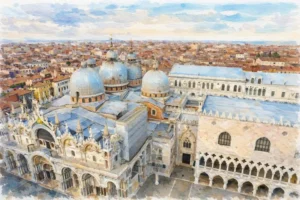
Pick the St Mark’s area when your day already includes St Mark’s Square, the Basilica, the Doge’s Palace or the waterfront. I found this location easier to fit into a central sightseeing route, especially when I wanted a short gondola experience without crossing the city to another neighborhood. Operators in this area commonly present the ride around narrow canals and the historic San Marco basin.
Compare the St Mark’s-area gondola experience
See St Mark’s area gondola options
Choose Rialto or a Grand Canal departure when the main purpose is seeing Venice’s broadest waterway, waterfront palaces and the movement of public and private boats. It can suit first-time visitors who want the Grand Canal to be the visual focus, although the surrounding area may feel busier and require more walking around crowded lanes and bridges.
For a broader planning view, compare the typical cost of a Venice gondola ride before deciding which starting area fits your budget and schedule.
| Starting area | Usually suits travelers who want | Practical trade-off |
|---|---|---|
| St Mark’s | Narrow canals, San Marco scenery and easy access after major landmarks | Routes vary, and local crowds can make the meeting area busy |
| Rialto or Grand Canal | Wide-water views, palace façades and livelier canal traffic | The ride may feel less intimate, and a Grand Canal segment is not guaranteed |
How do you distinguish the meeting point from the actual boarding station?
The meeting point is not always the place where the gondola waits. Some experiences ask passengers to check in with a host, guide or ticket representative before walking to a nearby landing stage. Others use a named pier, dock or station as both the meeting and boarding location.
Before setting out, I would match the booking confirmation against the exact meeting-point name, map pin, walking instructions and check-in time. Look for wording such as “boarding station,” “gondola pier,” “meeting point” or “check-in desk.” A landmark near St Mark’s or Rialto may identify the neighborhood without identifying the actual water access point.
Review the listed boarding instructions before departure
Compare Rialto and Grand Canal departures
What scenery is emphasized by operators in each starting area?
St Mark’s-area descriptions generally emphasize intimate canals, historic façades and views around the San Marco basin or Bridge of Sighs zone. That does not mean every ride follows an identical circuit. The gondolier’s route can depend on water traffic, access conditions, timing and the operator’s assigned itinerary.
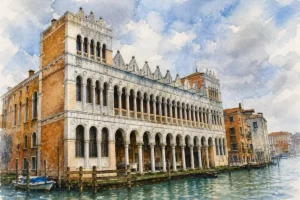
Rialto and Grand Canal descriptions usually emphasize the scale of the Grand Canal, historic palaces and the changing scene of boats, vaporetti and working waterways. This gives the ride a more open, active feel, while smaller side canals may or may not be included.
Does boarding near Rialto guarantee a particular Grand Canal route?
No. A Rialto-area departure does not by itself guarantee a fixed Grand Canal section, a specific palace view or a particular sequence of canals. “Near Rialto” can describe the starting neighborhood rather than every part of the ride. Read the current itinerary wording and treat route descriptions as the operator’s intended emphasis, not a promise that every passenger will see the same landmarks from the same angle.
For location-specific planning, the guide to where gondola rides start in Venice can help you estimate how the departure area fits with your walking route.
Check the current Rialto route description
View current Rialto gondola route details
Does a San Marco departure guarantee Bridge of Sighs access?
No. Starting near St Mark’s or the Bridge of Sighs zone does not guarantee that the gondola will pass beneath a particular bridge or reach a specific viewpoint. The departure area makes that scenery more relevant to the experience, but the actual route can change with traffic, water conditions, access restrictions and the operator’s plan.
I would choose the St Mark’s option for its overall setting and convenience rather than booking it solely to pass under one named bridge. If a specific landmark is essential, look for explicit, current wording in the itinerary and ask the operator before reserving.
How should walking distance and local crowds influence your choice?
Use your day’s walking pattern as the first filter. St Mark’s is sensible after central landmark visits, while Rialto can work better after exploring the market area, crossing the Rialto Bridge or staying in the San Polo and Santa Croce direction. Venice’s bridges, uneven paving and dense lanes can make a short map distance feel slower with luggage, children or limited mobility.
Crowds also change the experience. Midday around the major squares and bridges can mean slower walking and a busier waterfront. Earlier or later departures may feel more manageable, but boat traffic and visibility are not constant. The most convenient starting area is often the one that avoids an unnecessary cross-city walk immediately before check-in.
For help weighing the atmosphere against the cost, see this practical guide to whether a Venice gondola ride is worth it.
Which departure-area details should you verify before reserving?
Check the live listing for the exact boarding station, not just “St Mark’s” or “Rialto.” I would also verify the route emphasis, ride length, commentary language, shared or private setup, passenger limit, accessibility notes and what happens if weather or water conditions affect the ride. These details matter more than the neighborhood label when comparing two similar-looking experiences.
- Confirm the precise meeting point and walking time from your previous attraction.
- Check whether the product says Grand Canal, smaller canals, San Marco basin or a mixed route.
- Confirm the advertised duration and whether check-in time is separate from time on the gondola.
- See if the ride is shared, private, guided or accompanied by commentary.
- Review cancellation, rescheduling and weather provisions before payment.
For official municipal information relevant to current Venice access and local measures, consult the Comune di Venezia information page as part of your planning.
Reserve after checking the exact boarding details
Check current St Mark’s gondola availability
Which starting area is better overall?
St Mark’s is the more practical choice for visitors already sightseeing around San Marco who prefer an intimate canal setting. Rialto or the Grand Canal is the stronger match for travelers who put broad water views and palace-lined scenery first. Neither starting area guarantees one fixed route, so the best decision combines the day’s walking plan with the operator’s current boarding and itinerary details.
For a wider comparison of routes, prices and practical expectations, use the Venice gondola ride planning hub.
Powered by GetYourGuide