
Home » Venice Cooking Classes » Pasta & Tiramisu vs Pizza Cooking Class in Venice: Which Should You Choose?
Pasta & Tiramisu vs Pizza Cooking Class in Venice: Which Should You Choose?
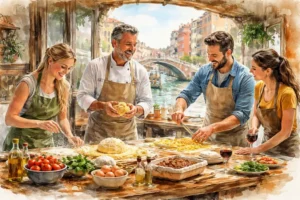
If you are deciding between a pasta & tiramisu cooking class or a pizza cooking class in Venice, the short answer is that most travelers choose the pasta and tiramisu experience because it reflects regional Italian traditions more closely and fits better with the Venetian culinary context. Pizza classes are enjoyable and interactive, but pasta and tiramisu workshops tend to focus more on classic techniques and local food culture.
Both types of cooking classes are beginner-friendly, typically last around two to three hours, and end with a shared meal. The main difference lies in what you learn and the style of cooking involved.
Check available times for the pasta and tiramisu cooking class in Venice
Understanding the Two Types of Cooking Classes
Cooking schools and local instructors in Venice usually offer two main formats for tourists:
- Pasta and tiramisu cooking classes
- Pizza cooking workshops
Both experiences introduce participants to Italian cooking fundamentals, but they differ in ingredients, techniques, and regional relevance.
Powered by GetYourGuide
Pasta & Tiramisu Cooking Class: What the Experience Includes
Pasta and tiramisu classes are the most common cooking workshops available in Venice. Participants typically learn how to prepare fresh pasta dough and assemble a traditional Italian dessert.
Typical steps during the class
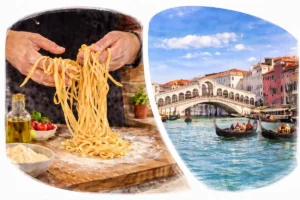
- Mixing flour and eggs to create pasta dough
- Kneading and rolling the dough by hand
- Shaping pasta varieties such as tagliatelle
- Preparing a simple sauce
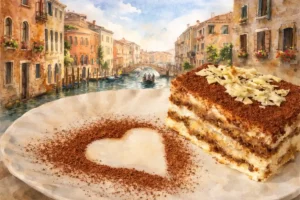
- Layering tiramisu with mascarpone cream and coffee-soaked biscuits
Tiramisu is one of Italy’s most famous desserts and has historical roots in the Veneto region. Its origins and evolution are documented in the culinary history of tiramisu.
Because pasta and tiramisu rely on simple ingredients and manual preparation, they are ideal for travelers who want to understand the fundamentals of Italian cooking.
See upcoming availability for the Venice pasta and tiramisu cooking experience
Pizza Cooking Class: What You Can Expect
Pizza classes focus on dough fermentation, shaping techniques, and baking methods. Participants usually prepare their own pizza from start to finish.
Typical pizza class activities
- Mixing and kneading pizza dough
- Learning how fermentation affects texture
- Shaping the pizza base
- Adding toppings
- Baking the pizza in an oven
Pizza classes are highly interactive and often appealing for families and groups because the results are easy to customize.
However, pizza is more strongly associated with southern Italy—particularly Naples—while Venetian cuisine traditionally emphasizes seafood, pasta, and regional ingredients connected to the lagoon economy.
The broader culinary heritage of the city is tied to the history of trade and regional food traditions described in the cultural overview of Venice and its lagoon.
Side-by-Side Comparison
| Feature | Pasta & Tiramisu Class | Pizza Class |
|---|---|---|
| Main Focus | Fresh pasta and dessert preparation | Dough fermentation and baking |
| Skill Level | Beginner friendly | Beginner friendly |
| Regional Connection | Closer to Venetian cuisine | More associated with southern Italy |
| Hands-On Activity | Rolling pasta and assembling dessert | Shaping dough and baking pizza |
| Typical Duration | 2–3 hours | 2–3 hours |
| Family Appeal | Moderate | Very high |
Real Experiences from Travelers
Anna – United Kingdom
“We chose the pasta and tiramisu class because we wanted to learn something we could recreate at home. The instructor explained every step clearly, and the small group made it feel relaxed.”
David – Canada
“I’ve made pizza many times before, so learning fresh pasta was more interesting. Rolling the dough and shaping it by hand gave me a new appreciation for Italian cooking.”
Elena – Spain
“Our kids enjoyed making pizza because they could add their own toppings. But the tiramisu part of the pasta class ended up being everyone’s favorite moment.”
View the schedule for the Venice pasta and tiramisu cooking class
Which Class Should You Choose?
Choose pasta and tiramisu if:
- You want to learn classic Italian cooking techniques
- You prefer a more traditional culinary experience
- You are interested in regional Venetian food culture
- You want to prepare both a main dish and dessert
Choose a pizza cooking class if:
- You are traveling with children
- You enjoy baking and dough techniques
- You prefer customizable recipes
- You want a casual group activity
What Most Visitors to Venice Choose
In practice, pasta and tiramisu classes tend to be the most popular option among visitors. They align closely with Italian culinary identity and provide techniques that travelers often recreate later at home.
If you want a deeper explanation of the experience, this guide about whether a pasta and tiramisu cooking class in Venice is worth it explores what participants actually learn.
You can also see a breakdown of what you learn in a pasta and tiramisu cooking class, including the techniques taught during the session.
For travelers comparing multiple options, this overview of the best cooking classes available in Venice can help identify the right experience.
FAQ – Pasta vs Pizza Cooking Classes in Venice
-
1. Are pasta cooking classes harder than pizza classes?
Not necessarily. Pasta classes involve more manual preparation, but the techniques are simple and beginner friendly.
-
2. Do both classes include a meal?
Yes. Participants typically eat the dishes they prepare at the end of the session.
-
3. Are pizza classes more suitable for kids?
Often yes, because children enjoy choosing toppings and shaping the dough.
-
4. Do pasta classes teach regional Italian recipes?
Yes. Many classes highlight traditional recipes connected to Italian culinary history.
-
5. How long do cooking classes usually last?
Most sessions take between two and three hours.
-
6. Can beginners join both types of classes?
Yes. Cooking classes designed for tourists assume no prior cooking experience.
-
7. Do instructors speak English?
Most classes targeting visitors are conducted in English.
-
8. Are ingredients included in the class price?
Yes. Ingredients and equipment are normally provided by the instructor.
-
9. Is tiramisu difficult to prepare?
No. The dessert mainly involves layering ingredients and chilling the mixture.
-
10. Do pizza classes use traditional ovens?
Some classes use professional ovens, while others rely on kitchen ovens depending on the venue.
-
11. Can dietary restrictions be accommodated?
Many cooking schools can adjust recipes for vegetarian diets.
-
12. Are cooking classes popular in Venice?
Yes. They are one of the most interactive cultural activities available to visitors.
Explore More Cooking Experiences in Venice
If you want to compare multiple cooking workshops and formats available across the city, visit the complete guide to Venice cooking classes.