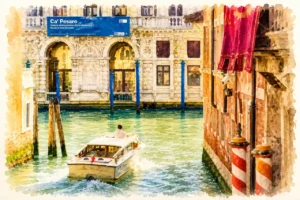

International Gallery of Modern Art: What You’ll See
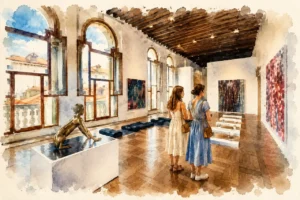
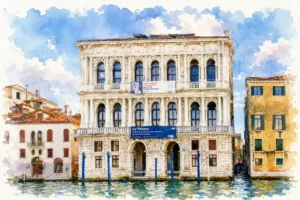
The International Gallery of Modern Art occupies the first and second floors of Ca’ Pesaro. The collection focuses on late 19th-century art through early 20th-century avant-garde movements, with strong representation of Italian artists and key European figures.
1. Gustav Klimt’s “Judith II”
One of the museum’s highlights is Gustav Klimt’s “Judith II” (1909). Unlike the golden, decorative style of his earlier works, this painting feels darker and more intense. Seeing it in person reveals brushwork and texture rarely noticeable in reproductions.
Many visitors come specifically for this painting, and it’s displayed in a quiet room that allows enough time and space to observe details without crowd pressure compared to larger museums.
2. Italian Modernism
Ca’ Pesaro is particularly strong in Italian modern art. You’ll encounter:
- Medardo Rosso’s expressive sculptures
- Arturo Martini’s powerful figurative works
- Gino Rossi and Umberto Moggioli from the Venetian Secession
- Felice Casorati’s structured, symbolic compositions
The museum played a historical role in promoting emerging artists through the early 20th-century Ca’ Pesaro exhibitions, which supported avant-garde experimentation in Venice.
3. International Avant-Garde Artists
Beyond Italian artists, you’ll also see works by:
- Marc Chagall
- Wassily Kandinsky
- Paul Klee
- Georges Rouault
These paintings help contextualize Venice within broader European modernism.
If you want to secure entry in advance and avoid ticket uncertainty, especially on weekends or during the Biennale season, you can check official ticket options online:
Check Ca’ Pesaro museum ticket availability
Temporary Exhibitions
In addition to its permanent collection, Ca’ Pesaro regularly hosts temporary exhibitions focused on modern and contemporary art. These can range from photography retrospectives to thematic explorations of 20th-century movements.
If you are visiting during major art events in Venice, such as the Biennale, temporary exhibitions often gain additional relevance. It’s worth checking what’s on before your visit so you can plan enough time inside.
Museum of Oriental Art: A Completely Different Experience
On the upper floor, you’ll find the Museum of Oriental Art, one of the most important collections of Japanese art in Italy.
This section contains over 30,000 objects collected during the late 19th century, many acquired during Prince Henry of Bourbon-Parma’s travels through Asia.
1. Samurai Armor and Weapons
Full samurai armor sets are among the most visually striking displays. The craftsmanship and detail are impressive, especially when viewed up close. Helmets, swords, and ceremonial gear are arranged chronologically, making it easy to follow historical development.
2. Japanese Ukiyo-e Prints
The museum houses delicate woodblock prints that depict landscapes, kabuki actors, and scenes from everyday life. These works influenced European Impressionists and Post-Impressionists, making a subtle but fascinating connection to the modern art collection downstairs.
3. Netsuke, Ceramics, and Lacquerware
Smaller objects—miniature carved netsuke, intricate lacquered boxes, porcelain from China and Japan—offer insight into daily and ceremonial East Asian life from the 17th to 19th centuries.
How the Two Collections Work Together
At first glance, modern European art and Japanese Edo-period artifacts may seem unrelated. However, Ca’ Pesaro’s layout creates an interesting dialogue between cultures.
Many 19th-century European artists were deeply influenced by Japanese aesthetics. Seeing both collections in the same building gives additional context to stylistic shifts in Western modernism.
How Long Should You Spend at Ca’ Pesaro?
| Visitor Type | Recommended Time | What to Focus On |
|---|---|---|
| Quick visit | 1 – 1.5 hours | Klimt, key Italian works, samurai armor |
| Art enthusiast | 2 – 3 hours | Full modern collection + Oriental Art details |
| Deep study | 3+ hours | Temporary exhibitions + stylistic comparisons |
The museum is calmer than the Gallerie dell’Accademia or the Doge’s Palace, which makes it suitable for a slower, more reflective visit.
To secure your preferred entry day and avoid last-minute changes, especially during high season, you can view ticket details here:
View Ca’ Pesaro ticket options in advance
Who Will Appreciate Ca’ Pesaro Most?
This museum isn’t focused on Renaissance art or Venetian masters like Titian. Instead, it’s ideal for:
- Visitors interested in modernism and early avant-garde art
- Travelers who want a quieter museum experience
- Those curious about cross-cultural influences between Europe and Asia
- Repeat Venice visitors looking beyond the main landmarks
Visitor Experience: Real Impressions
Experience 1: Many visitors mention being surprised by how peaceful the museum feels compared to Venice’s busier attractions. One recent guest noted that Klimt’s “Judith II” could be viewed without crowds, allowing time to observe facial expression and brush technique in detail.
Experience 2: Art students often appreciate the layout, which allows close study of sculptures and canvases. The rooms are not overcrowded with works, making the collection digestible.
Experience 3: Families sometimes find the samurai armor section unexpectedly engaging for children and teenagers, creating balance between serious modern art and visually dramatic historical artifacts.
Practical Notes Before Visiting
- The palace itself is worth attention—don’t miss the Grand Canal views from the windows.
- Photography policies may vary by exhibition.
- The museum is less crowded in the morning on weekdays.
- Temporary exhibition access is typically included in general admission.
If you prefer planning ahead instead of waiting in line or adjusting your schedule on the day, this is the official partner ticket page:
Reserve your Ca’ Pesaro entry ticket online
Frequently Asked Questions
1. Is Ca’ Pesaro mainly a modern art museum?
Yes. The primary focus is late 19th- and early 20th-century modern art, particularly Italian modernism and European avant-garde movements. However, the Oriental Art section forms a substantial part of the museum experience.
2. Can you see Klimt’s work at Ca’ Pesaro?
Yes, “Judith II” by Gustav Klimt is one of the museum’s signature works and a major highlight for many visitors.
3. Does one ticket include both modern and Oriental art sections?
Generally, yes. The standard admission ticket covers both the International Gallery of Modern Art and the Museum of Oriental Art. For detailed breakdowns, see what the Ca’ Pesaro museum ticket includes.
4. Is Ca’ Pesaro suitable for visitors who don’t know much about art?
Yes, because the exhibitions are clearly organized and not overwhelming. Even casual visitors tend to find specific highlights—like Klimt or samurai armor—that make the visit rewarding.
5. Is it worth visiting during a short Venice trip?
If you have a strong interest in modern art, yes. If your itinerary is strictly focused on Renaissance Venice, you may prioritize other museums first. Repeat visitors often rank Ca’ Pesaro among their favorite quieter stops.
Official Visitor Information
For opening hours, updated notices, and accessibility details, consult the official museum website: Ca’ Pesaro Visitor Information.
Plan Your Visit
For a complete guide to tickets, entry details, and planning tips, visit the main resource page: Ca’ Pesaro Modern & Oriental Art Museum Ticket Guide.
You can also review practical details and visit timing recommendations here: Ca’ Pesaro Museum ticket information.