
Home » Things to Do & See » Venice Highlights & Hidden Gems Walking Tour: Is It Worth It?
Venice Highlights & Hidden Gems Walking Tour: Is It Worth It?
Table of Contents
This 2-hour Venice highlights and hidden gems walking tour is best understood as a compact orientation walk: it links major sights such as Rialto Bridge, Teatro La Fenice, St Mark’s area, Doge’s Palace, the Bridge of Sighs and the Arsenal while a guide adds context and helps you understand how central Venice fits together. It is not the same search intent as a list of secret places to visit independently; the value here is guided structure, explanations and navigation.
| Practical point | What to expect |
|---|---|
| Duration | About 2 hours |
| Meeting area | Campo S. Bortolomio, near the Carlo Goldoni statue |
| Main focus | Outdoor sightseeing, orientation and guided context |
| Key areas | Rialto, La Fenice, San Marco, Bridge of Sighs and Arsenal |
| Food and drinks | Not included |
| Best for | First-time visitors and travelers who want a short guided introduction |
The strongest reason to book is efficiency. Venice’s distances look short on a map, but its lanes, bridges and crowd patterns can make a first walk surprisingly disorienting. A two-hour route gives you a mental map without consuming half the day, leaving time to return independently to the places that interest you most.
Practical verdict: this is a good choice if you want a guided first pass through central Venice with recognizable landmarks and useful orientation. Choose a longer neighborhood-focused tour instead if your priority is spending most of the walk in genuinely obscure corners far from the main sights.
Powered by GetYourGuide
What this two-hour walking tour actually covers
The current activity is built as a two-hour guided walk through central Venice. The listed sightseeing sequence includes Rialto Bridge, Teatro La Fenice, St Mark’s Basilica, Doge’s Palace, the Bridge of Sighs and the Venetian Arsenal. That is a broad spread for two hours, so the sensible expectation is orientation and exterior context rather than long interior visits at each landmark.
The tour starts around Campo S. Bortolomio, close to Rialto and easy to combine with independent sightseeing before or after the walk. The Carlo Goldoni statue provides a clear visual meeting landmark, which matters in Venice because street addresses are less intuitive than in a conventional grid city.
I would treat the route as a way to answer three questions quickly: where are the major sights relative to one another, what is worth returning to later, and which streets or areas make sense for the rest of your day.
See the current meeting point and departure options
The route from Rialto to Venice’s monumental core
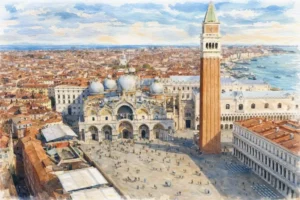
Starting near Rialto makes geographic sense. The Rialto area was historically tied to Venice’s commercial life, while San Marco became the city’s monumental and political center. Walking between them helps explain why these two zones remain the busiest axis of central Venice.
Teatro La Fenice adds a different layer. The official theatre history records its inauguration in 1792 and the extraordinary cycle of destruction and reconstruction that gave “The Phoenix” its enduring identity. If that stop catches your interest, our La Fenice visitor guide explains how a separate daytime visit works.
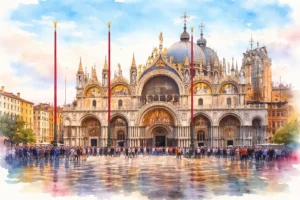
The San Marco section then brings several headline landmarks together. Because the walk is short, do not assume that seeing St Mark’s Basilica or Doge’s Palace on the route means admission is included. If you want interiors, plan separate timed tickets and use our Doge’s Palace and St Mark’s planning guide to structure that part of the day.
How “hidden gems” fits the experience
The phrase hidden gems needs realistic expectations here. The published route contains several of Venice’s most famous sights, so this is not a two-hour expedition through unknown residential corners. Its more useful promise is that a guide can point out details, stories, connecting lanes and viewpoints that independent visitors may pass without understanding.
If your main goal is a self-guided list of lesser-known places, our existing Venice hidden gems guide is the better starting point. The two pages serve different intents: one helps you choose places to explore independently; this article evaluates whether paying for a short guided orientation adds enough value.
That distinction also helps avoid disappointment. Book this tour for context plus navigation around major central sights. Book a specialist neighborhood walk if you specifically want Cannaregio backstreets, artisan workshops, remote campos or a route designed to avoid the San Marco–Rialto corridor.
What is included — and what is not
The current activity information centers on the live guide and the walking route. It also lists photo opportunities and restroom breaks, while private or customizable formats may be offered depending on the option selected. Guide languages currently include English, French, Italian and Spanish.
Food and drinks are not included. More importantly, attraction admission should not be assumed. A walking stop outside a basilica, palace or theatre is different from an entry ticket. Check the selected booking option before paying if interior access is essential to you.
| Element | Planning assumption |
|---|---|
| Live guide | Included in the guided walking experience |
| Walking route and commentary | Core of the experience |
| Meals | Not included |
| Landmark admission | Do not assume it is included unless your selected option explicitly says so |
| Private/customized format | May be available depending on booking option |
Check exactly what your selected tour option includes
Who gets the most value from a guided orientation walk
I would prioritize this format for a first visit to Venice, especially when you have only one or two days. The city is highly walkable, but being walkable does not automatically make it easy to understand. A guide can connect history, geography and practical orientation while you are already moving between places you probably intended to see.
It can also work well at the beginning of a longer stay. Instead of trying to use the tour as your complete Venice experience, use it to decide where to return. You may discover that La Fenice deserves a separate visit, that you want more time around the Arsenal, or that you have seen enough of San Marco and would rather spend the afternoon elsewhere.
It is less compelling for repeat visitors who already navigate Venice confidently or for travelers who prefer completely independent wandering. In those cases, the same two hours may be more valuable in one specific neighborhood or museum.
Walking conditions, accessibility and what to bring
Comfortable footwear matters more than the headline distance. Venice walking means stone paving, narrow passages, bridges and frequent changes of direction. Even a two-hour tour can feel tiring if you arrive after a full morning of sightseeing.
The activity is currently listed as wheelchair accessible, but I would still verify the exact selected-date route before booking if step-free movement is essential. Venice’s bridges create genuine mobility constraints, and an operator may need to adapt a route rather than follow the same path used by every group.
Bring only what you need, keep water and weather protection appropriate to the season, and arrive early enough that finding the meeting point does not become part of the challenge. For accessibility, language and meeting-point details, the live booking page should take precedence over older descriptions.
How to fit the tour into a one-day Venice itinerary
The cleanest strategy is to use the walk as an orientation block rather than sandwiching it between several tightly timed admissions. If you tour in the morning, leave the afternoon for one major interior plus independent wandering. If you tour later, use the earlier part of the day for a museum or neighborhood away from the central corridor.
Avoid booking separate entry tickets at times that assume the walking tour will end at a specific landmark unless the current voucher confirms the finish point and duration. Venice delays are rarely dramatic, but five or ten minutes can matter when you are crossing bridges toward a timed entrance.
For additional bookable ideas that can follow the walk, use our Venice experiences hub. The best combination is usually one guided overview plus one deeper experience, not a full day of back-to-back tours.
Booking strategy and final verdict
The bestseller reference data makes this a commercially relevant but still relatively modest-volume experience, which is useful context: you are not choosing a giant mass-market attraction. The decision should therefore come down to whether two hours of guided orientation solves a real problem in your itinerary.
Check the live product for the exact start time, language, group format, accessibility notes and cancellation conditions. The current listing indicates free cancellation up to 24 hours in advance for a full refund, but booking terms can change and the checkout page is authoritative.
For first-time visitors, I think the strongest use case is the beginning of the trip: learn the central geography, hear the stories behind the landmarks, then explore independently with more confidence. For travelers whose only goal is secret Venice, choose a more specialized off-the-beaten-path route instead.
View live availability for the Venice highlights walking tour
Powered by GetYourGuide