What Makes the Venice Natural History Museum Different?
The Venice Natural History Museum (Museo di Storia Naturale di Venezia) is set inside the Fondaco dei Turchi, a 13th‑century palace overlooking the Grand Canal. So before you even examine fossils or skeletons, you’re walking into Venetian architectural history.
What sets it apart from other museums in Venice:
- Large dinosaur skeleton displays
- Extensive zoological collections
- Interactive digital installations
- Less crowded atmosphere compared to major landmarks
- Family‑friendly layout
Unlike art-heavy institutions in Venice, this museum focuses on evolution, biodiversity, prehistoric life, and ecosystems. It’s a refreshing change if you’ve already seen your fill of Renaissance paintings and religious masterpieces.
What You’ll Actually See Inside
1. Dinosaur Skeletons
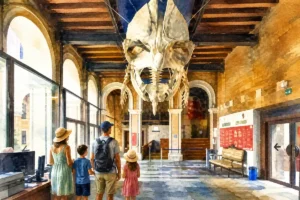
The centerpiece is a massive Ouranosaurus skeleton. For many visitors, this alone makes the visit worthwhile. The skeleton is well lit and dramatically displayed, making it one of Venice’s most unexpectedly impressive museum moments.
2. Prehistoric Fossils
You’ll explore fossils from the Dolomites and other regions, tracing ancient marine life and early ecosystems. The lighting and layout are modern and easy to follow.
3. Evolution & Biodiversity Galleries
These rooms feature taxidermy animals, rare specimens, and explanatory panels (with English translations). The museum does a solid job making complex scientific concepts accessible.
4. Interactive Installations
Digital screens and hands‑on displays make it especially engaging for children and teenagers.
How Long Do You Need?
Most visitors spend:
- 1.5 hours for a quick visit
- 2 hours for a relaxed experience
- Up to 3 hours with kids
It’s compact compared to major European natural history museums, which can be a benefit if you’re short on time in Venice.
Pros and Cons at a Glance
| Pros | Cons |
|---|---|
| Less crowded than major landmarks | Smaller than big-city museums |
| Great for families | Not a must-see for art lovers |
| Impressive dinosaur displays | Limited café facilities |
| Air-conditioned indoor activity | Can feel quick for science enthusiasts |
| Accessible location near Santa Lucia station | Not prominently advertised in Venice |
Is It Worth the Ticket Price?
For most visitors, the entrance fee is reasonable. When compared to major attractions in Venice, it’s on the affordable side.
If you’re planning to visit multiple museums in Venice, bundled passes can sometimes offer better value. If you’re used to city passes in other European destinations, you’ll recognize how fast individual entry fees add up.
Compare city card options and attraction access
Even if you’ve used city passes in other destinations before, it’s smart to compare whether a combined museum ticket makes sense for your Venice itinerary.
Real Visitor Experiences
Visitor Review 1 (Family Perspective):
“We needed something different after churches and palaces. Our two kids (8 and 11) loved the dinosaur skeleton. It was the only museum where they didn’t rush us out.”
Visitor Review 2 (Solo Traveler):
“It’s not massive, but I appreciated the calm atmosphere. Sitting by the Grand Canal afterward was a highlight.”
Visitor Review 3 (Couple in Winter):
“Great rainy-day activity. Warm inside, informative, and not crowded compared to other sights.”
Who Should Definitely Visit
- Families with children under 15
- Travelers needing a break from crowded landmarks
- Visitors staying near Santa Lucia train station
- Science and fossil enthusiasts
- Anyone visiting during heavy rain or extreme heat
Who Might Skip It
- Travelers with only one day in Venice
- Visitors focused only on art history
- Those who prefer grand, large-scale museums like London or Paris
Location & Accessibility
The museum sits along the Grand Canal in the Santa Croce district. It’s:
- About 10 minutes walking from Venice Santa Lucia train station
- Accessible via vaporetto stops nearby
- Easier to reach than attractions in deep San Marco
This convenience alone increases its value if you’re visiting Venice for a short stay.
When Is It Most Worth It?
Rainy Days: Venice can feel limited during heavy rain. This museum becomes an excellent sheltered option.
Summer Heat: Air-conditioned indoor attractions are extremely valuable in July and August.
High Season: When St. Mark’s Square feels overwhelming, this museum offers quiet cultural time.
Check combined pass availability before booking
Booking in advance can help you plan efficiently, especially during spring and autumn weekends.
Tickets & Planning Tips
Before visiting:
- Check opening hours (they vary by season).
- Confirm last entry times.
- Arrive early if visiting during school holidays.
- Allow 90–120 minutes minimum.
If you’re unsure about ticket types, you can review different visitor options here:
Venice Natural History Museum ticket options
How It Compares to Other Venice Museums
Compared to:
- Doge’s Palace: More historical drama but much more crowded.
- Gallerie dell’Accademia: Art-focused, less interactive.
- Peggy Guggenheim Collection: Modern art vs. scientific exhibits.
The Natural History Museum wins for relaxed pacing and child engagement.
If you want a deeper breakdown of value and expectations, you can also read:
Full museum value analysis
What to See First (Quick Route Guide)
If you’re short on time:
- Head straight to the dinosaur hall.
- Walk through the fossil marine section.
- Finish in the biodiversity gallery downstairs.
For a detailed walkthrough of exhibits, visit:
Complete list of highlights inside the museum
Is It Worth Visiting With Kids?
Yes — this is arguably one of the best museums in Venice for children. Displays are visually strong, explanations are manageable, and the scale is not overwhelming.
If your Venice trip includes multiple days, this museum provides balance to a mostly art and architecture-based itinerary.
View attraction passes and entry options
Frequently Asked Questions
1. How much does entry cost?
Standard tickets are moderately priced compared to Venice’s top attractions. Discounts usually apply for children, students, and seniors.
2. Is it suitable for toddlers?
Yes, although toddlers may not fully engage with educational panels. The dinosaur skeletons tend to impress all ages.
3. Is the museum crowded?
Rarely extremely crowded. Even during high season, it feels calmer than San Marco attractions.
4. Can you take photos?
Photography is generally allowed without flash, but always confirm onsite signage.
5. Is English information available?
Yes. Most major exhibits include English explanations.
6. Is it accessible for wheelchairs?
The museum is largely accessible, including elevator access to upper floors.
7. How does it compare to other European natural history museums?
It’s smaller than London or Vienna equivalents but more manageable for a short visit.
8. What’s the best time of day to visit?
Late morning or mid-afternoon typically offers the calmest experience.
Opening Hours & Official Information
Always verify seasonal schedules before planning your visit:
Official opening hours and updates
Conclusion: Is It Worth It?
If you’re looking for something different in Venice, want fewer crowds, or are traveling with children, the Venice Natural History Museum is worth including in your itinerary.
It won’t replace the city’s iconic landmarks — but it adds balance, breathing space, and educational depth to your trip.
For ticket options and booking details, visit:
Venice Natural History Museum entry information