
Home » Venice Cooking Classes » What Do You Learn in a Venice Pasta & Tiramisu Cooking Class?
What Do You Learn in a Venice Pasta & Tiramisu Cooking Class?
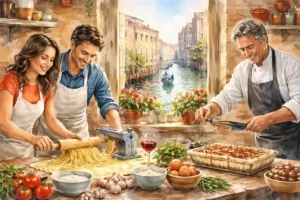
A Venice pasta and tiramisu cooking class teaches practical Italian cooking skills that participants can easily repeat at home. During the class, you typically learn how to make fresh pasta dough from scratch, shape traditional pasta varieties, prepare authentic tiramisu, and understand the basic techniques used in Italian home kitchens.
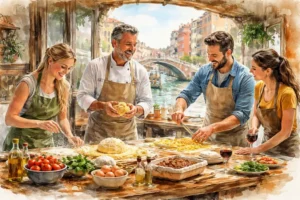
Unlike a restaurant experience where the food simply arrives at the table, a cooking class focuses on the preparation process. Participants handle ingredients, practice techniques, and cook a complete meal step by step under the guidance of a local instructor.
For many visitors, the most valuable outcome is not just the meal itself but the transferable knowledge of how traditional Italian dishes are prepared.
Check available dates for the Venice cooking class
The Core Skills You Learn
A typical pasta and tiramisu class focuses on a small number of techniques that form the foundation of Italian cooking. The instructor demonstrates each step and participants repeat the process at their own workstation.
By the end of the session, most participants have practiced the following skills:
- Preparing fresh egg pasta dough
- Kneading and resting the dough correctly
- Rolling pasta using a manual pasta machine
- Cutting pasta into traditional shapes
- Preparing tiramisu cream and layering the dessert
- Cooking pasta with a simple Italian sauce
These are practical kitchen skills rather than advanced culinary techniques. The goal is to teach methods that can be easily recreated in a normal home kitchen.
Powered by GetYourGuide
Step 1: Making Fresh Pasta Dough
The class usually begins with preparing pasta dough. Instructors explain the traditional ratio of ingredients and demonstrate how Italian cooks mix flour and eggs directly on the work surface.
Participants learn how to:
- Create the flour well used in traditional pasta making
- Combine eggs and flour gradually
- Knead the dough until it reaches the correct elasticity
- Let the dough rest before rolling
Understanding the texture of the dough is one of the most important lessons. Instructors typically encourage participants to feel the dough and adjust the flour level slightly depending on humidity and egg size.
Step 2: Rolling and Cutting the Pasta
After resting, the dough is rolled using a hand-cranked pasta machine. This step teaches participants how to gradually thin the dough while maintaining its structure.
Participants learn:
- How thin pasta dough should be rolled
- How to avoid tearing or sticking
- How to cut pasta shapes such as tagliatelle or fettuccine
- How to dust pasta with flour to prevent clumping
The instructor usually explains that most Italian households historically prepared pasta by hand, especially in northern regions such as Veneto.
Because Venice sits within the Veneto region, fresh egg pasta is a traditional element of local cuisine.
Step 3: Preparing the Pasta Dish
Once the pasta is shaped, the class moves on to cooking the dish itself.
Instead of complicated sauces, instructors usually demonstrate simple preparations such as:
- Butter and sage sauce
- Tomato-based sauces
- Light olive oil preparations
This approach highlights an important principle of Italian cooking: high-quality ingredients combined with simple techniques.
Step 4: Learning How to Prepare Tiramisu
The second part of the class focuses on preparing tiramisu, one of Italy’s most recognizable desserts.
Tiramisu consists of several layers:
- Mascarpone cream
- Espresso-soaked ladyfinger biscuits
- Cocoa powder
Participants learn how to:
- Prepare mascarpone cream properly
- Balance sweetness and coffee flavor
- Layer the dessert evenly
- Chill the tiramisu before serving
According to historical references, tiramisu originated in the Veneto region during the 20th century and later became internationally famous.
Read more about the origin of tiramisu
Typical Structure of a Venice Cooking Class
Although every instructor organizes the class slightly differently, most follow a similar structure.
| Class Stage | Activity | Approximate Time |
|---|---|---|
| Introduction | Ingredient explanation and preparation | 20 minutes |
| Pasta preparation | Mixing, kneading, and resting dough | 30 minutes |
| Pasta shaping | Rolling and cutting pasta | 30 minutes |
| Dessert preparation | Preparing tiramisu | 20 minutes |
| Cooking and dining | Cooking pasta and eating together | 40 minutes |
This structure keeps the class interactive while allowing enough time to cook and enjoy the finished dishes.
See available time slots for the cooking class
Practical Knowledge You Take Home
Many participants say the most useful aspect of the class is learning techniques they can repeat later.
Typical takeaways include:
- A reliable fresh pasta dough recipe
- Understanding how long pasta dough should rest
- Basic pasta shaping techniques
- A traditional tiramisu recipe
- Confidence preparing Italian dishes at home
Some instructors also provide printed recipes so participants can recreate the meal after returning home.
Experiences Shared by Participants
Reviews of cooking classes in Venice frequently mention the social and educational aspects of the experience.
Emma – United Kingdom
“I had never made pasta before. The instructor explained every step clearly, and it was easier than expected once we started kneading the dough.”
Michael – Canada
“The class felt like cooking in someone’s home kitchen rather than a formal lesson. The tiramisu recipe alone made the experience worth it.”
Laura – Spain
“I liked that we actually prepared the entire meal ourselves instead of just watching a demonstration.”
Understanding Venetian Food Culture
Cooking classes also introduce participants to broader aspects of Venetian food culture.
Venice developed its culinary identity through centuries of trade across the Mediterranean. Ingredients such as spices, rice, and seafood became integrated into local recipes.
The city’s lagoon environment also influenced its cuisine, shaping ingredients and cooking traditions.
Learn more about Venice and its lagoon heritage
How This Class Compares to Other Cooking Experiences
Many travelers consider multiple types of cooking classes when visiting Venice.
A pasta and tiramisu class is generally considered the most balanced introduction because it combines a main dish and dessert in a single session.
For example, this guide explains the differences between
whether a pasta and tiramisu cooking class in Venice is worth it.
You can also compare this experience with other options in the city such as
pasta and tiramisu vs pizza cooking classes in Venice.
For travelers exploring multiple options, this overview of the
best cooking classes in Venice can also be helpful.
View current availability for the Venice cooking class
FAQs
1. Do you learn to make pasta completely from scratch?
Yes. Participants prepare the pasta dough themselves using flour and eggs, then knead and roll it before cutting the pasta.
2. Is the tiramisu made during the class or prepared in advance?
Participants typically prepare the tiramisu themselves, although it may need chilling time before being served.
3. Are the recipes traditional Italian recipes?
Most instructors teach classic recipes used in Italian households rather than restaurant variations.
4. Will the instructor demonstrate techniques before participants start?
Yes. Instructors usually demonstrate each step before participants repeat the process.
5. Are cooking tools provided during the class?
All necessary tools such as pasta machines, bowls, and utensils are provided by the host.
6. Is the pasta cooked immediately after being prepared?
Fresh pasta cooks quickly and is usually boiled within minutes of being cut.
7. Are participants divided into groups?
Some classes organize participants in pairs or small groups depending on the number of workstations.
8. Can beginners follow the instructions easily?
Yes. Classes are designed for people with little or no cooking experience.
9. Do participants receive recipes afterward?
Many instructors provide printed or digital recipes after the class.
10. Are the ingredients locally sourced?
Most classes use locally available ingredients typical of Italian kitchens.
11. Can the pasta shapes vary?
Yes. Depending on the instructor, participants might prepare tagliatelle, fettuccine, or other fresh pasta types.
12. Is wine served during the class?
Many cooking classes include wine served during the meal portion.
13. How many participants usually attend?
Group sizes generally range between 6 and 12 participants.
14. Can children participate in the cooking class?
Some classes allow children if accompanied by adults.
Explore More Cooking Experiences in Venice
To compare different culinary activities available in the city, visit the complete guide:
This page lists the main types of cooking classes available in Venice and helps travelers choose the most suitable experience.