
Home » Venice Cooking Classes » Is the Pasta & Tiramisu Cooking Class in Venice Worth It?
Is the Pasta & Tiramisu Cooking Class in Venice Worth It?
Yes — for most travelers, a Pasta & Tiramisu Cooking Class in Venice is worth it. It offers a practical way to experience Italian culture beyond sightseeing: you learn traditional recipes, cook with local ingredients, and share a meal in a small group environment.
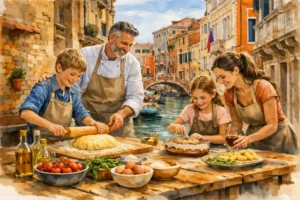
Instead of simply eating pasta in a restaurant, participants actually prepare the dough, shape the pasta by hand, and assemble tiramisu following traditional methods. For many visitors, that hands-on element makes the experience more memorable than another tour or museum.
The class is especially valuable if you want an activity that is interactive, social, and educational while visiting Venice.
Check availability for the Venice Pasta & Tiramisu Cooking Class
What Happens During the Cooking Class
Most pasta and tiramisu classes in Venice follow a clear structure designed for beginners. Even participants with no cooking experience can follow along.
Typical timeline of the class:
- Welcome and introduction to Italian ingredients
- Preparation of fresh pasta dough
- Shaping pasta (often tagliatelle or similar styles)
- Preparing tiramisu step-by-step
- Cooking and plating the pasta dish
- Eating the meal together with wine
Classes usually take place in small kitchens or culinary studios located in residential parts of Venice rather than tourist restaurants.
Participants often work in pairs or small groups, which keeps the atmosphere relaxed and collaborative.
Powered by GetYourGuide
What You Actually Learn
Despite being beginner-friendly, the class usually covers real culinary techniques used in Italian kitchens.
Skills participants typically learn include:
- Mixing and kneading fresh pasta dough
- Rolling dough to the correct thickness
- Cutting pasta by hand
- Preparing a classic tiramisu cream
- Layering the dessert correctly
Tiramisu itself is a relatively modern Italian dessert but deeply associated with Venetian culture. According to historical references, the dish originated in the Veneto region and spread worldwide during the late 20th century.
Learn more about the history of tiramisu
These techniques can easily be recreated at home after the trip.
For a deeper explanation of the techniques used in the class, see this guide on
what you learn in a Venice pasta and tiramisu cooking class.
How Much the Cooking Class Usually Costs
Cooking classes in Venice typically fall into a consistent price range.
| Experience Type | Typical Price | Duration |
|---|---|---|
| Pasta & Tiramisu class | €70 – €110 | 2.5 – 3 hours |
| Private cooking class | €120 – €200+ | 3 hours |
| Pizza cooking class | €60 – €95 | 2 – 3 hours |
The price usually includes:
- All ingredients
- Cooking equipment
- Guidance from an instructor
- Wine during the meal
- The meal you prepared
Compared with a typical restaurant dinner in Venice, the cost is similar — but you gain a learning experience and social activity.
A breakdown of different class price levels can be found here:
Venice cooking class price guide.
Who This Cooking Class Is Best For
This type of activity works particularly well for certain travel styles.
Best suited for:
- First-time visitors to Italy
- Couples looking for a relaxed evening activity
- Solo travelers who want to meet people
- Families with older children
- Travelers interested in food culture
Families often enjoy cooking classes because they provide a structured activity that keeps everyone engaged.
You can see additional options here:
Venice cooking classes suitable for families.
Situations Where It Might Not Be Worth It
While popular, the class is not ideal for every traveler.
It may be less suitable if:
- Your schedule in Venice is extremely short
- You prefer fast sightseeing over slow activities
- You already cook Italian cuisine regularly
- You want a purely historical or cultural tour
Cooking classes are slower experiences. The goal is to cook, learn, and socialize — not to cover multiple attractions.
Reviews from Participants
Feedback from participants consistently highlights the interactive nature of the class.
Anna (Germany)
“The instructor explained everything clearly and we prepared pasta completely from scratch. It was my favorite activity in Venice.”
Daniel (United States)
“I booked the class with my partner. We learned simple techniques but the atmosphere was relaxed and the wine helped everyone feel comfortable.”
Sofia (Spain)
“The tiramisu recipe was surprisingly easy and we still make it at home. The group meal at the end was the best part.”
Practical Tips Before Booking
A few practical tips can improve the experience.
- Book at least 1–2 days in advance in peak season
- Choose afternoon or evening classes for a relaxed pace
- Avoid eating a large meal before the class
- Wear comfortable clothes suitable for cooking
Many classes take place in residential neighborhoods rather than tourist centers, which also gives a different perspective on Venice.
The city itself has a long culinary tradition linked to its lagoon environment and trade history.
Overview of Venice and its lagoon heritage
How This Cooking Class Compares to Other Food Experiences
Visitors often compare cooking classes with food tours or restaurant dining.
Cooking class advantages:
- Hands-on experience
- Learn techniques you can repeat
- Social atmosphere
Food tours advantages:
- Visit multiple restaurants
- Taste several dishes
- Learn about local food history
If you want a detailed comparison between different class types, this guide explains the difference between
pasta & tiramisu vs pizza cooking classes in Venice.
You can also explore a broader list of
recommended cooking classes in Venice.
See available dates for the pasta and tiramisu class
FAQs
1. Do you need cooking experience to join the class?
No. Most classes are designed for beginners and instructors guide each step.
2. How long does the cooking class usually last?
Most sessions run between 2.5 and 3 hours including preparation, cooking, and eating.
3. What type of pasta do participants usually make?
Common varieties include tagliatelle, fettuccine, or similar egg-based fresh pasta.
4. Are ingredients included in the class price?
Yes. The price generally includes all ingredients, cooking equipment, and wine.
5. Is wine always served?
Many classes include wine during the meal, but the exact offering depends on the host.
6. Can dietary restrictions be accommodated?
Some classes can adapt recipes for vegetarian diets if requested in advance.
7. Is the class conducted in English?
Yes. Most cooking classes aimed at travelers are taught in English.
8. Can children join the cooking class?
Many classes allow children, especially if accompanied by parents.
9. Do participants eat the food they prepare?
Yes. The meal prepared during the class is typically eaten together at the end.
10. Will I receive the recipes?
Most instructors provide printed or digital recipes so you can recreate the dishes later.
11. Is the class held in a restaurant?
Often the class takes place in a culinary studio or home kitchen rather than a restaurant.
12. How many people are usually in the class?
Groups typically range from 6 to 12 participants.
13. Do classes sell out?
During high season (spring–summer) popular classes can sell out several days ahead.
14. Is it better to book online?
Booking online ensures your spot and allows you to select the time that fits your schedule.
Explore More Venice Cooking Experiences
If you want to compare multiple options before deciding, visit the main guide:
It lists different cooking experiences, price comparisons, and class formats available across the city.